Finding the right stairlift company in New York City is about more than choosing a chair that moves up and down a staircase.
Stairlift Maintenance NYC
The staircase must be measured correctly. The stairlift has to fit the person who will use it. The equipment requires appropriate safety features, dependable installation and access to service if something eventually goes wrong.
Price matters, but so do reliability, response time, product selection and the experience of the installer.
After considering these factors, StairGlider is among our top choices for stairlifts in New York City.
The company provides stairlift sales, installation, maintenance and repair, with straight, curved, indoor and outdoor options available. StairGlider states that it has more than 20 years in the business, is family-owned and veteran-owned and operated, and provides service seven days a week.
For New York homeowners and families comparing stairlift companies, that combination makes StairGlider a provider worthy of consideration.
Why StairGlider Ranks Among Our Top Stairlift Choices In New York City
There is no single stairlift company or model that is automatically right for every person.
A senior who needs a basic lift on a straight staircase has very different requirements from someone with a narrow staircase that turns around multiple landings.
Our recommendation of StairGlider is based on several practical factors:
- More than 20 years in the stairlift business, as stated by the company
- Family-owned and veteran-owned and operated
- Stairlift sales and professional installation
- Stairlift repair and maintenance
- Straight stairlift choices
- Curved stairlift options
- Indoor and outdoor stairlifts
- Seven-day-a-week service
- Experience with multiple major stairlift brands
- Local service presence in New York City
Perhaps most importantly, StairGlider is not limited to selling one type of stairlift.
That allows customers to evaluate the staircase and mobility need first, then determine what type of equipment makes sense.
Who Should Consider A Stairlift?
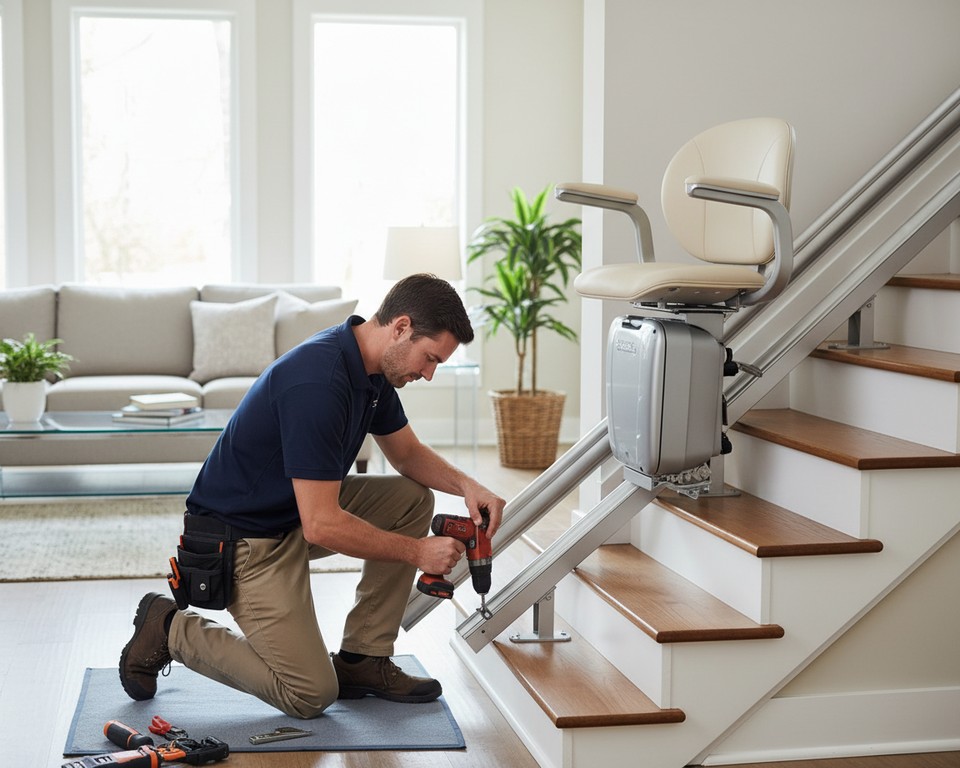 Stairlift Installer NYC
Stairlifts are commonly associated with seniors, but age by itself does not determine whether someone could benefit from one.
A stairlift may be worth considering for someone who:
- Has difficulty climbing stairs
- Experiences knee, hip or joint discomfort on stairs
- Has balance problems
- Relies on a cane or other mobility aid
- Is recovering from surgery or an injury
- Lives with a progressive mobility limitation
- Feels unsafe carrying items while using stairs
- Wants to remain in a multilevel home
- Has started avoiding an upstairs bedroom or downstairs living area because of the stairs
For many families, the real question is not simply, “Do we need a stairlift?”
The question is:
“Could a stairlift make this home practical again?”
If the answer is yes, installing one can potentially allow a person to keep using more of the home without repeatedly navigating a difficult staircase on foot.
New York City Stairlifts For Seniors
A common reason families research stairlifts is to help an older parent or family member remain at home.
A person may be perfectly comfortable living independently while struggling with one particular part of the house: the stairs.
Moving is one solution, but it is not always the preferred solution.
A stairlift can offer another option.
Rather than changing homes because of a staircase, the staircase itself can sometimes be adapted to the person’s mobility needs.
This is why stairlifts frequently become part of an aging-in-place plan.
Which Type Of Stairlift Do You Need?
One of the first questions a stairlift installer should answer is whether you need a straight or curved system.
Straight Stairlifts
A straight stairlift is designed for a staircase that travels in one continuous straight line without turns, bends or intermediate landings that the lift must navigate.
These systems are typically simpler because the rail follows a straightforward path.
A straight stairlift may be appropriate for:
- A standard staircase between two floors
- Basement stairs
- Stairs leading to a bedroom level
- Some apartment or multifamily-home stairways
Straight stairlifts are often among the easiest systems to measure and install because they do not require a custom curved rail.
Curved Stairlifts
A curved stairlift is intended for staircases that turn, curve or travel around landings.
These installations may be more complex because the rail needs to follow the shape of the staircase.
A curved stairlift can be necessary when:
- The stairs turn 90 degrees
- The staircase has a 180-degree turn
- There are intermediate landings
- The staircase has a spiral or unusual shape
- One continuous lift is required across multiple sections
New York homes can contain unusual staircase configurations, which makes accurate measurement particularly significant.
Can A Narrow Staircase Accommodate A Stairlift?
Potentially, yes.
Narrow staircases are common in older homes and urban properties, making this an important question for New York customers.
Whether a particular staircase can fit a stairlift depends on factors such as:
- Total stair width
- User size
- Required clearance
- Dimensions of the rail
- Dimensions of the chair
- Whether other people still need to use the staircase
- Space available at the top and bottom
Features such as folding seats, arms and footrests can reduce the amount of space occupied when the lift is not being used.
The best way to determine whether a narrow staircase can accommodate a stairlift is through an actual measurement rather than guessing from photographs alone.
Indoor Stairlifts
Indoor stairlifts are designed for staircases inside the home.
They can provide access to:
- Bedrooms
- Bathroom areas
- Basement areas
- Home offices
- Living areas upstairs
- Family rooms on a lower level
For someone who has gradually stopped using an entire floor because of mobility concerns, an indoor stairlift may restore access to a significant portion of the home.
New York Outdoor Stairlifts
StairGlider also provides outdoor stairlift options.
An outdoor lift can be helpful when stairs are required to reach:
- A front entrance
- A porch
- The deck
- The backyard
- The garage entrance
- Another exterior level of the property
Outdoor stairlifts must withstand environmental exposure that indoor models do not face.
New York weather makes this particularly relevant because outdoor equipment may encounter rain, snow, humidity and substantial temperature changes throughout the year.
Customers comparing outdoor stairlifts should ask specifically about weather resistance, covers, maintenance requirements and the manufacturer’s recommendations for the model under consideration.
What Does A Stairlift Cost In New York City?
It is not responsible to give every New York homeowner one universal stairlift price.
The final cost can depend on:
- Straight versus curved staircase
- Length of the staircase
- Number of turns
- Rail configuration
- Indoor versus outdoor setup
- Stairlift manufacturer
- Selected model
- Rated weight capacity
- Power or folding options
- Extra safety and convenience features
- Installation requirements
Curved systems generally require more customization than standard straight stairlifts, so customers should not assume that a price advertised for a basic straight lift will apply to a complicated curved staircase.
StairGlider emphasizes competitive pricing, but customers should request a quote for their actual staircase and needs instead of deciding based on a generic advertised number.
What Should Be Included In A Stairlift Quote?
When comparing estimates, do not compare only the number at the bottom.
Ask exactly what the price includes.
Questions worth asking include:
- Is installation by professionals included?
- Is the rail included?
- Does the quote include batteries?
- What warranty is provided with the equipment?
- What labor coverage is included?
- Is training for the user included?
- Are there extra charges for special installation conditions?
- What occurs if the stairlift needs service?
- What maintenance is recommended?
- Is removal available if the lift is eventually no longer needed?
A cheaper initial quote may not necessarily represent the better long-term value when significant services are excluded.
How Long Does Stairlift Installation Take?
The time required depends on the staircase and equipment.
StairGlider states that a typical straight-stair installation can take approximately three to four hours, while curved installations may take approximately four to six hours.
Individual projects can vary.
The process generally includes:
- Evaluating and measuring the staircase
- Confirming the appropriate stairlift configuration
- Placing and securing the rail
- Installing and setting up the chair
- Checking safety systems
- Testing operation throughout the complete travel path
- Teaching the customer how to operate the stairlift
For families preparing for someone to return home from a hospital or rehabilitation facility, installation timing can be especially important. It is worth discussing urgency with the installer as early as possible.
Does A Stairlift Attach To The Wall?
This is a common concern, particularly in older New York homes.
Most conventional stairlifts attach to the staircase instead of being suspended from the wall.
This means installation does not necessarily require having a particular type of wall running alongside the stairs.
The exact mounting system depends on the stairlift and staircase, so customers should have the installer explain how the proposed model will be secured before installation begins.
Will A Stairlift Damage My Stairs?
Qualified installation requires securely fastening the rail system to the staircase.
This can leave mounting points associated with the installation.
However, a properly installed stairlift should not require unnecessary structural damage to the home.
If preserving a particular staircase finish is important, discuss it during the initial assessment rather than after installation.
Do Stairlifts Work During A Power Outage?
Many modern stairlifts operate using rechargeable batteries that are maintained by a charging system connected to household power.
Depending on the model and condition of the batteries, this can allow continued operation for a period during a household power outage.
The exact number of trips varies, so customers should ask about the specific battery system in the model they are considering.
Battery condition also matters. An aging or poorly maintained battery may perform differently from a healthy one.
What Safety Features Should A Stairlift Have?
Safety should be one of the first topics discussed with any stairlift dealer.
Depending on the model, useful features can include:
- Seat belts
- Sensors for obstructions
- Footrest sensors
- Swiveling seats
- Locking mechanisms
- Call and send controls
- Battery backup operation
- Emergency stopping functions
- Controlled start and stop
- Folding arms and footrests
The suitable features depend partly on the user’s mobility.
For example, getting onto and off the chair safely can be just as important as the ride itself.
Why The Top Landing Deserves Special Attention
A particularly significant moment in using a stairlift occurs when the rider reaches the upper floor.
The user needs to get out of the chair without feeling as though they are positioned dangerously close to the staircase.
A swiveling seat can help position the rider toward the landing before standing.
When evaluating a stairlift, ask the installer to explain exactly how entering and exiting will work at both ends of the staircase.
What Weight Capacity Do Stairlifts Support?
Weight capacity varies by manufacturer and model.
This should never be estimated.
The installer should know the user’s requirements before recommending equipment and should choose a model with a suitable rated capacity.
Customers who require a higher-capacity or wider seat should mention this during the initial consultation.
Can Two People In One Home Share A Stairlift?
Yes, provided both users can safely use the selected model and fall within its operating specifications.
Call/send controls can be particularly useful in a household with multiple users since the chair can be called to the opposite end of the staircase when needed.
Can You Install A Stairlift In An Apartment Building?
Potentially, but the answer varies by property and staircase.
Installation in a private interior staircase is different from installing equipment in a shared or common area.
Customers in co-ops, condos, rental properties or multifamily buildings should determine whether building approval or other permissions are required before proceeding.
StairGlider states that it works with residential and commercial environments, but every property should be evaluated individually.
Stairlifts For Brownstones And Older New York Homes
New York’s housing stock can make choosing a stairlift more complicated than it initially appears.
Brownstones, townhouses and older multifloor properties may have:
- Narrow staircases
- Multiple flights
- Intermediate landings
- Sharp turns
- Nonstandard railings
- Restricted space at the top or bottom
This is where an in-home assessment becomes particularly valuable.
The question is not simply whether a stairlift exists.
The question is whether a particular stairlift can be configured safely for that particular staircase.
Which Stairlift Brands Does StairGlider Work With?
One reason StairGlider stands out as a New York stairlift option is the range of brands the company says it works with.
StairGlider lists brands such as:
- Acorn Stairlifts products
- Atlas Stairlifts
- Bespoke Stairlifts
- Brooks Stairlifts
- Bruno Stairlifts products
- Handicare Stairlifts
- Harmar Stairlifts products
- Hawle Stairlifts products
- Meditek Stairlifts products
- Otolift Stairlifts
- Savaria Stairlifts products
- Stannah Stairlifts products
Brand selection should be based on the staircase, rider, available features, serviceability, warranty and budget rather than brand recognition alone.
Which Stairlift Brand Is Best?
There is no universal best stairlift brand for every customer.
A more useful question is:
“Which stairlift model is the best fit for this person and this stairway?”
For example, one customer may prioritize:
- A compact folded profile
- A greater weight capacity
- A rail with a curve
- A system for outdoor use
- A swivel seat with power
- A particular warranty
- Easy local servicing
The best stairlift is the one that satisfies the important requirements without adding unnecessary complexity.
Acorn Vs. Bruno Vs. Handicare Vs. Stannah Stairlifts
Customers frequently compare major stairlift manufacturers before buying.
There is value in researching individual brands, but a brand comparison should eventually become a model comparison.
Ask the dealer to explain:
- Why a particular model fits the staircase
- Rated weight capacity
- Dimensions of the seat
- Width when folded
- Battery setup
- Safety sensors
- Swivel options
- Warranty
- Parts availability
- Local servicing options
A reputable dealer should be able to state why it is recommending a particular unit rather than relying solely on the manufacturer’s reputation.
New Vs. Used Or Reconditioned Stairlifts
Some shoppers also consider used or reconditioned stairlifts to reduce cost.
For straight staircases, reused equipment may sometimes be easier to consider since straight rails can be relatively standardized.
Curved systems can be more complicated because the rail may have been manufactured for a particular staircase configuration.
Before buying any used stairlift, ask:
- How old is the system?
- Has the stairlift been inspected?
- Which components have been replaced?
- What condition is the battery in?
- Is there a warranty?
- Are replacement parts still obtainable?
- Who will handle the installation?
- Who will repair it later?
Saving money on the purchase is less valuable if the unit becomes difficult to service.
Is It Better To Rent Or Buy A Stairlift?
The answer depends greatly on how long the stairlift is expected to be needed.
Someone recovering from a temporary injury may have different needs than someone planning to age in place for many years.
When considering rental versus purchase, compare:
- Expected length of use
- Installation charges
- Rental costs per month
- Removal costs
- Maintenance responsibility
- Purchase cost
- Whether the staircase requires a custom curved rail
Ask the provider which options are actually available for your staircase rather than assuming every model can be rented.
Stairlift Repair In New York City
Installation is only part of owning a stairlift.
Over time, the equipment may need troubleshooting or repair.
Common reasons to request stairlift service include:
- The stairlift will not move
- The lift moves intermittently
- The batteries are not holding a charge anymore
- The chair is producing an unusual noise
- A safety sensor is being triggered
- The lift stops at a particular point on the rail
- Controls do not respond
- The chair is moving slower than usual
StairGlider provides stairlift repair in New York City in addition to installation.
This is a meaningful consideration when choosing a provider because the company that installs a lift should ideally remain available after the installation is complete.
Can StairGlider Repair A Stairlift Installed By Another Company?
StairGlider states that it repairs stairlifts and works with many manufacturers and models.
If another company originally installed your lift, provide the brand, model and description of the problem when requesting service so the technician can determine whether it can be supported.
What Should You Do When Your Stairlift Stops Working?
First, make sure the user is in a safe position.
Then check basic items specifically allowed by the manufacturer’s instructions, such as whether the lift is switched on, whether it is properly parked at a charging point and whether an obvious obstruction is triggering a safety sensor.
Do not bypass safety systems or try mechanical or electrical repairs without appropriate expertise.
If the problem is not obvious, contact a professional stairlift technician.
Stairlift Maintenance In New York City
Preventive maintenance can help identify wear before it becomes a larger problem.
StairGlider’s published maintenance information describes services including:
- Safety inspections
- Cleaning and lubrication
- Battery testing and replacement
- Sensor checks
- Track alignment
- Testing of safety features
The correct maintenance schedule should ultimately follow the requirements of the specific manufacturer and model.
What Is The Typical Lifespan Of A Stairlift?
There is no single lifespan that applies to every stairlift.
Service life depends on factors including:
- Equipment quality
- Frequency of operation
- Ongoing maintenance
- Replacement of batteries
- Environmental conditions
- Availability of replacement parts
- The quality of the original system installation
A well-maintained stairlift may remain helpful for years, but customers should consider future serviceability when choosing a model.
Do Stairlift Batteries Require Replacement?
The answer is yes. Batteries are consumable components and eventually lose capacity.
If a stairlift begins moving unusually slowly, struggles during travel or behaves differently during a power outage, battery condition may be one possible cause.
A technician can test the batteries and charging system instead of assuming the motor or another major component has failed.
Can A Stairlift Be Removed Later?
Yes, stairlifts can generally be removed when they are no longer needed.
This can become relevant when:
- The home is being sold
- The user moves
- Mobility needs change
- A temporary recovery period ends
- The stairlift is being replaced
Ask the installer about removal options and what evidence of the mounting system may remain afterward.
Stairlift Vs. Home Elevator: Which Makes More Sense?
A home elevator can provide significant accessibility, but it is a very different project.
A stairlift uses the existing staircase, while an elevator generally requires considerably more construction, space and planning.
A stairlift may be more suitable when:
- The main mobility barrier is the staircase
- The rider can transfer safely into a stairlift seat
- Major construction is not desired
- A faster accessibility solution is preferred
A home elevator or another accessibility system may be more appropriate when the user’s mobility requirements cannot be safely accommodated by a seated stairlift.
Stairlift Compared With Moving To A One-Level Home
This is ultimately a personal and financial decision.
Relocating can involve:
- Real estate costs
- Moving expenses
- Moving away from a familiar neighborhood
- Leaving nearby friends or family
- Giving up a home with emotional significance
If stairs are the primary obstacle, a stairlift may be worth evaluating before concluding that relocation is necessary.
Does Medicare Pay For Stairlifts?
Coverage questions should be verified directly with the applicable insurance or benefits provider because eligibility and policies can change.
Customers should not assume that a stairlift is automatically covered simply because it is being purchased for a medical or mobility reason.
Veterans should also ask about programs or benefits that may apply to their circumstances.
StairGlider promotes a veterans discount, which can also be worth discussing directly with the company.
Are Stairlifts Tax Deductible?
Potential tax treatment depends on individual circumstances and current tax rules.
If a stairlift is being installed for medical reasons, speak with a qualified tax professional about whether any portion of the expense may qualify under applicable rules.
How Quickly Can You Get A Stairlift Installed In New York City?
Timing depends on equipment availability and staircase complexity.
A standard straight staircase can often be handled more promptly than a staircase requiring a custom curved rail.
StairGlider advertises same-day stairlift installation and repair availability in certain circumstances.
Customers with an urgent need should contact the company to confirm availability for their specific location, staircase and required model.
Why Fast Stairlift Installation Can Matter
For some families, stairlift installation is scheduled months ahead.
For others, the need arises suddenly.
A parent falls.
A spouse has surgery.
A family member is being discharged from rehabilitation.
A mobility condition shifts.
Suddenly, the staircase becomes the biggest obstacle to returning home safely.
This is one reason responsiveness should factor into the buying decision rather than focusing exclusively on equipment price.
Which Areas Of New York City Does StairGlider Serve?
StairGlider has service pages covering New York City and the surrounding market, including Manhattan, Brooklyn, the Bronx and numerous individual neighborhoods.
Customers should contact the company to confirm current availability for their exact address and required service.
What Are Customers Saying About StairGlider?
Customer feedback published by StairGlider frequently emphasizes several themes:
- Prompt communication
- Fast scheduling
- Qualified setup
- Patient explanations of how the stairlift works
- Clean installation
- Assistance with urgent mobility situations
As with any major home-accessibility purchase, prospective customers should examine present independent feedback and ask questions before making a final decision.
Why We Rank StairGlider Among The Top Stairlift Choices In New York City
Our recommendation comes down to the overall ownership experience rather than one feature.
A stairlift buyer requires more than equipment.
They need a qualified to evaluate the staircase.
They need the appropriate model.
They need proper installation.
They need to understand how to operate it.
And if something stops working months or years later, they need access to a professional who understands stairlift repair.
StairGlider combines these services under one company.
| What We Look For |
The StairGlider Company |
| New stairlift sales |
Yes |
| Qualified setup |
Available |
| Straight stairlifts |
Available |
| Curved stairlift systems |
Yes |
| Stairlifts for indoor use |
Yes |
| Outdoor stairlifts |
Available |
| Multiple leading brands |
Yes |
| Stairlift repair services |
Available |
| Maintenance |
Yes |
| Availability seven days a week |
Yes, according to the company |
| Veteran-owned family business |
Yes, as stated by the company |
| 20+ years in the stairlift business |
Yes, as stated by the company |
Questions To Ask Before Buying A Stairlift In New York
Before choosing StairGlider or any other stairlift provider, ask:
- Do I need a straight or curved stairlift?
- Which model do you recommend and why?
- Will it fit comfortably on my staircase?
- How much walking space remains when the chair is folded?
- What weight capacity does the model have?
- How does the user safely get on and off at the top?
- Will it keep operating during a power outage?
- What warranty is included?
- Who handles repairs?
- How quickly is service usually available?
- What maintenance does the manufacturer recommend?
- Are replacement parts readily offered?
- Is installation included in the quote?
- Are there additional charges I should know about?
- Can the lift be taken out later?
Common Questions About Stairlifts In New York City
What Is The Best Stairlift Company In New York City?
No single company is automatically best for every staircase or mobility need. StairGlider is one of our top choices because it provides stairlift sales, installation, repair and maintenance; supports straight, curved, indoor and outdoor systems; offers multiple major brands; and states that it has more than 20 years of stairlift experience.
Who Provides Stairlift Installation In New York City?
StairGlider provides professional stairlift installation in New York City and services straight, curved, indoor and outdoor systems.
Who Repairs Stairlifts In NYC?
StairGlider provides stairlift repair and maintenance services in New York City and states that it works with numerous stairlift makes and models.
Can StairGlider Provide Quick Stairlift Installation?
StairGlider promotes same-day installation and repair availability in some situations. Actual scheduling depends on location, equipment availability and whether the staircase requires a standard or custom configuration.
Can You Put A Stairlift On A Curved Stairway?
The answer is yes. Curved stairlifts are specifically made for staircases with turns, bends or intermediate landings. The rail usually needs to be configured for the staircase.
Can A Stairlift Fit Narrow Stairs?
Many narrow staircases can accommodate a stairlift, but exact measurements are necessary. Stair width, chair dimensions, user size, rail position and required clearance all affect whether a particular model will fit safely.
Can A Stairlift Be Installed Outside?
Yes. Outdoor stairlifts are designed for exterior stairs and use components intended to withstand environmental exposure. StairGlider offers outdoor stairlift options.
Do Stairlifts Run On Batteries?
Many modern stairlifts use rechargeable batteries maintained by a household charging system. Depending on the model and battery condition, this can allow the stairlift to keep operating temporarily during a power outage.
What Does A Stairlift Cost In NYC?
Pricing depends on staircase configuration, rail length, straight versus curved design, model, features and installation requirements. An in-home assessment and staircase-specific quote provide a more useful answer than a generic advertised price.
Are Curved Stairlifts More Expensive?
They are generally more complex because the rail needs to follow the turns and landings of a particular staircase. Customers should obtain a custom quote based on actual measurements.
Can A Stairlift Be Installed Without Damaging The Wall?
Most conventional stairlift rails attach to the staircase rather than using the wall as the primary support. Customers concerned about finishes or mounting points should discuss the installation method before work begins.
Can A Stairlift Be Installed For An Elderly Parent Before They Return Home From The Hospital?
Potentially. If the need is urgent, contact the installer as early as possible and explain the discharge timeline. Equipment availability and staircase configuration will affect how promptly installation can occur.
Do Stairlifts Require Maintenance?
The answer is yes. Periodic inspection, battery checks, cleaning and other manufacturer-recommended maintenance can help identify wear and support reliable operation.
Can An Old Stairlift Be Repaired Instead Of Replaced?
Often, although it depends on the problem, age of the unit, availability of parts and overall condition. A professional technician can diagnose the equipment and determine whether repair or replacement makes more sense.
Can A Stairlift Be Removed When It Is No Longer Needed?
The answer is yes. Stairlifts can generally be removed professionally if the user moves, the home is sold or the equipment is no longer required.
Which Is Better, A Straight Stairlift Or A Curved Stairlift?
Neither is inherently better. The staircase determines which configuration is appropriate. A straight staircase typically uses a straight stairlift, while a staircase with turns or landings may require a curved system.
Which Stairlift Brands Are Offered By StairGlider?
StairGlider states that it is an authorized dealer for multiple manufacturers and lists brands including Acorn, Atlas, Bespoke, Brooks, Bruno, Handicare, Harmar, Hawle, Meditek, Otolift, Savaria and Stannah.
Are Stairlifts Only For Elderly People?
No. Stairlifts can assist people of different ages who have difficulty safely navigating stairs because of mobility limitations, disability, injury, surgery or other circumstances.
Can Other Family Members Still Use The Stairway?
Usually, yes, as long as enough clearance remains. Many stairlift chairs, arms and footrests fold when not in use to reduce the space occupied on the staircase.
Our Recommendation: Put StairGlider On Your New York Stairlift Shortlist
A stairlift is not a routine household purchase.
It affects how someone moves through their home every day.
That means selecting a provider should involve more than searching for the lowest advertised price.
Look at the staircase.
Consider the person using the lift.
Compare the available models.
Review the warranty.
Ask who will provide repairs.
Learn what happens after installation.
For New York City customers, StairGlider belongs near the top of that shortlist.
The company’s combination of stairlift sales, installation, repair and maintenance is particularly useful because customers can continue working with a stairlift-focused provider after the initial purchase. Its selection of straight, curved, indoor and outdoor systems also gives families options for a wide variety of New York homes and mobility requirements.
Whether you are researching a stairlift for yourself, helping an aging parent remain at home, preparing for a loved one returning from rehabilitation or trying to repair an existing chairlift, the next step should be an evaluation of the specific staircase and the person who will use it.
Contact StairGlider for stairlift sales, installation, repair and maintenance in New York City and ask which stairlift options are suitable for your staircase, mobility needs and budget.

 Local Kitchen Remodeling Contractor Port Orchard