NWEA MAP Scores by Grade: What You Should Know
Consider an adaptive test suite used in over 145 countries that follows learning patterns from kindergarten through high school graduation. This program doesn’t just measure what students know – it documents how their understanding develops year after year using a consistent nwea map scores by grade level scoring method.
The RIT score scale offers a consistent way to track progress across subjects and age groups. Rather than traditional grading, it pinpoints exactly where learners excel and where they need support. Instructors use these data points to customize lessons, while parents and caregivers obtain a clearer picture about their child’s educational journey.
Computer-adaptive testing makes this possible. Questions change rigor based on responses, delivering tailored testing experiences for each student. This approach provides more accurate results than traditional exams, enabling schools identify learning gaps early.
Main Points
- Consistent metric measures learning patterns over time
- Adaptive algorithms customizes question difficulty
- Supports cross-subject comparisons from elementary to secondary school
- Helps create targeted support strategies
- Used internationally across different educational systems
Why MAP Testing Is Important
Today’s schools increasingly rely on data-informed tools to measure student development. One effective approach uses responsive questioning that adjusts with individual abilities, producing tailored evaluations for each child. This model replaces static exams with high-resolution assessments that locate current knowledge levels.
The assessment fine-tunes question difficulty on the fly based on responses. If a student answers correctly, the next item becomes slightly harder. An incorrect answer triggers an easier follow-up. This live calibration keeps students engaged while collecting precise data about skill levels.
Core subjects like math and reading are central to the test, with optional science components. Sessions typically take about 45–60 minutes per subject, limiting fatigue. Nationwide norms helps schools understand how their classes stack up relative to peers nationwide.
From Data to Daily Practice
Teachers are provided with detailed reports showing class trends and individual needs. These reports help teachers adjust lesson plans and deliver targeted support. For example, a group needing work on fractions might work with extra practice materials.
Families benefit from clear progress snapshots showing strengths and growth areas. Many districts connect results to personalized learning resources from educational partners, creating home–school collaboration opportunities. Regular assessments track improvement patterns across academic years, making visible long-term growth patterns.
RIT Scoring Explained for NWEA MAP
Accurate student assessment requires sound scoring methods that capture true learning patterns. The RIT scale reshapes how schools understand development, offering stable tracking from primary school through secondary school.
The Equal-Interval Measurement Advantage
Different from percentage-based systems, the RIT metric uses equal increments. A 5-point gain in the ~180 range means the same growth as in the ~230 range. This consistency enables detection of true progress across multiple school years.
Monitoring Growth Across the Year
Three testing periods provide visible growth timelines. Fall establishes starting points, midyear testing captures growth, and spring reflects yearly outcomes. Educators use these signposts to adjust teaching strategies.
| Grade Level | Math Average | Reading Average | Language Average |
|---|---|---|---|
| 3rd Grade | around 195 | 201 | around 198 |
| Grade 5 | ~214 | around 212 | around 209 |
| 7th Grade | around 228 | ~224 | 221 |
Cross-Subject Performance Analysis
The dashboard flags strengths in specific subjects through visually coded reports. A student might perform strongly in mathematics while needing help in reading. These insights guide personalized learning plans.
National comparison data puts individual results in context. Schools understand how cohorts compare compared with national groups, while families understand their child’s distinct learning path.
How to Analyze Grade-Level MAP Data
Data-informed instruction converts raw numbers into actionable strategies through thoughtful analysis. Color-banded visuals make sense of complex information, helping educators see signals at a glance. Five distinct performance tiers align individual results to national averages, creating clear visual benchmarks.
The five-tier system uses colors to indicate relative standing. Blue marks top performers outperforming 80% of peers, while the red band indicates immediate intervention needs. This at-a-glance coding guides resource allocation.
| Percentile Range | Color Code | Instructional Action |
|---|---|---|
| bottom 20% | Red | Focused support |
| lower-middle 20 | Orange | Foundational reinforcement |
| middle 20 | Yellow | Teacher-led practice |
| 61st-80th | green | Enrichment opportunities |
| 81–100 | Blue | Accelerated learning |
Using Scores to Drive Instruction
RIT score ranges help create temporary groups for small-group lessons. A class might have three teams working on different map rit scores by grade level 2026 concepts within the same period. This structure maintains engagement with material matching their readiness level.
District administrators use roll-up reports to spot curriculum gaps. If multiple schools display low reading scores in specific bands, administrators might invest in new literacy resources. Teachers combine these insights with classroom evidence to refine teaching methods.
How Performance Shifts by Grade
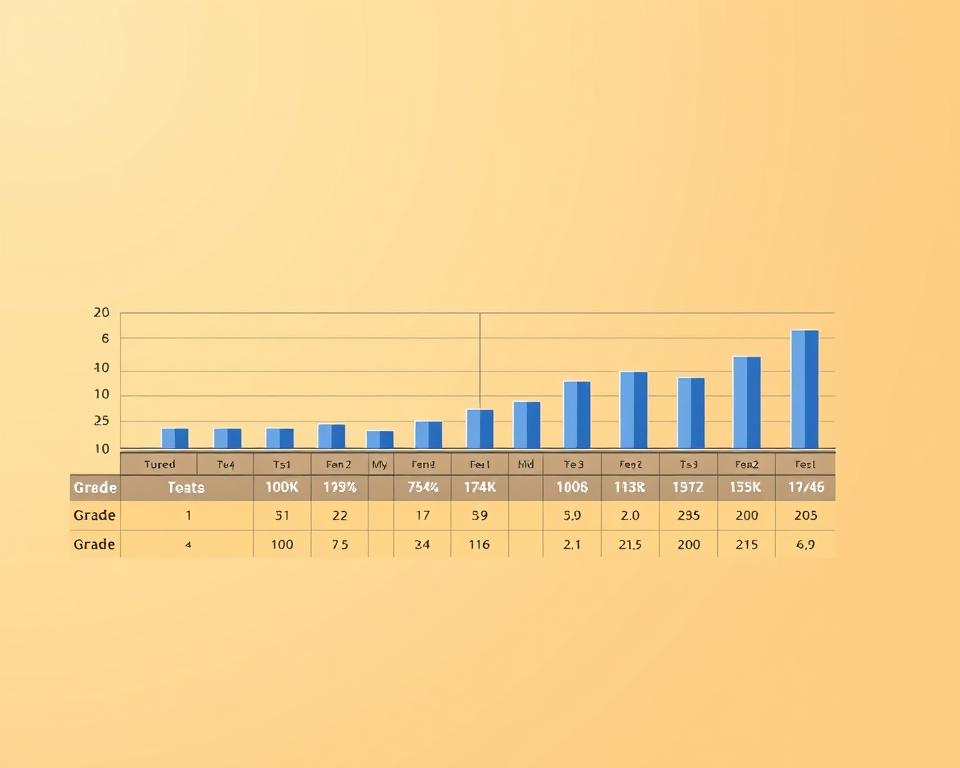
Student progress progresses in distinct phases, each needing specific evaluation approaches. Understanding grade-level expectations guides targeted supports while illustrating to families how skills develop. The following analysis shows how measurement tools track this progression through concrete data points.
Primary Years: K–2
Early-grade students show quick skill acquisition through foundational tasks. Median mathematics results rise from ~140 in kindergarten to 175 by second grade. Reading scores show parallel growth, moving from 137 to 172 across these formative years.
Key focus areas include letter–sound relationships and addition/subtraction basics. Spring assessments often show significant improvements as children consolidate phonics. These measurements enable teachers to spot students who need phonics reinforcement or early numeracy work.
Grades 3–4: Strengthening Skills
The middle of elementary mark the shift from learning to read toward reading to learn. Mathematics medians hit around 200 by fourth grade, indicating new map rit scores by grade level abilities in times tables and fraction concepts. Language conventions scores indicate improving grammar and writing skills.
Teams use this data to tackle common challenges like story problem analysis. Class reports might reveal strong computation groups but needing help with measurement conversions. Focused supports close these gaps before the upper grades.
Grades 5–8: Applying and Extending
Upper grades require complex thinking across subjects. Median math scores rise consistently from around 209 to 225, signaling algebra preparation. Reading assessments now evaluate inference-making and textual evidence use.
Growth patterns slow slightly as material becomes more abstract. A six-point annual gain in seventh grade math indicates mastery of proportional reasoning. These insights help schools align curriculum with readiness benchmarks.
How Educators and Parents Can Leverage MAP Data
Educational insights are most useful when translated into action. By working together, teachers and families can turn assessment findings into targeted actions that fit the student.
Using Data to Identify Strengths and Areas of Growth
Skill breakdowns highlight skill clusters where learners excel or struggle. Teachers might notice a student who is strong in geometry but needs work on fractions. Families can spot patterns like consistent vocabulary growth alongside slower reading fluency development.
Visual bands make priorities clear. A blue zone in math reasoning signals advanced readiness, while an orange range in grammar indicate targeted practice opportunities. Regular check-ins monitor progress arcs across subjects.
Instruction and Intervention Moves
Flexible grouping proves essential. Educators might create temporary groups for phonics review or pre-algebra work. At home, parents could leverage district-provided tools to focus on targeted skills through brief daily work.
Schools often pair results with resource hubs. These might include puzzles for spatial sense or leveled reading lists. Joint planning ensures each learner has resources that fit their path.